This post introduces one of Google’s ad media, the Google Display Network (GDN). Many people will already be familiar with this advertising tool; whether or not you work in media buying, you probably see GDN ads often. Let’s look at what makes GDN ads appealing. This post covers three main points:
- What makes GDN ads distinctive
- How GDN is charged
- Are GDN ads any good?
(A quick note: if you are already an old hand, feel free to skip to the parts you want to know more about. If you are new to digital media, we suggest reading through step by step.)
What are GDN (Google Display Network) ads?
If you haven’t worked with digital ads before, GDN may sound like an obscure name. Don’t worry: an analogy makes it easier to understand. Put simply, GDN ads are like “flyers in the digital world”. But unlike flyers handed to everyone on the street, you can choose cleverly who receives them. For example, you can target food lovers, travel enthusiasts, office workers, news websites, health websites and thousands of other targeting options. So many targeting options are possible because GDN covers a large network of websites, so your ads can appear across a great many sites.
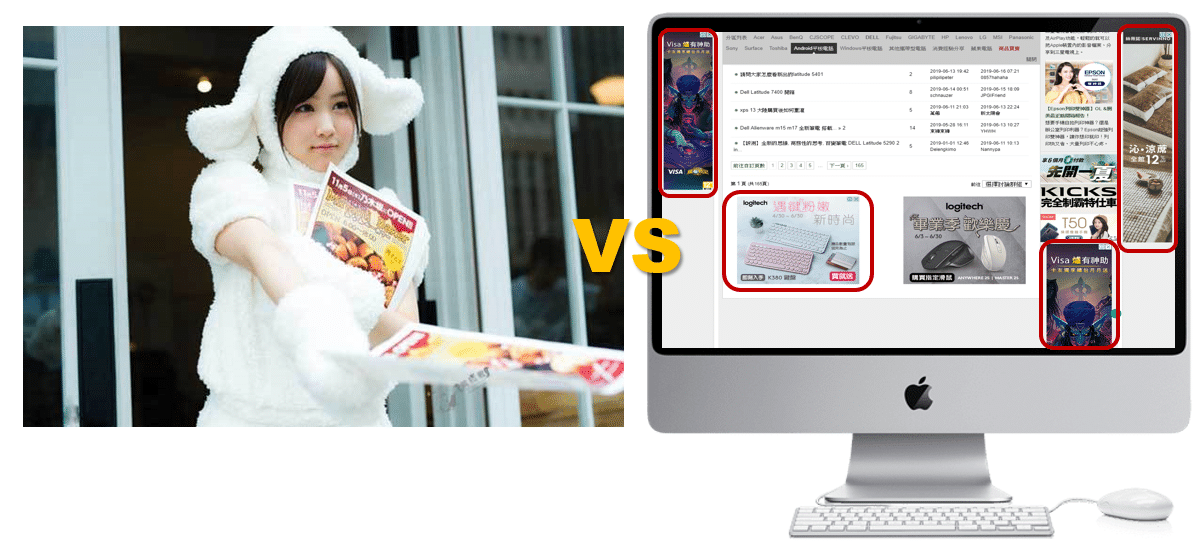
As for how Google can target interests (how does Google know what I’m interested in?), we will explain the logic and methods in a later article. Having explained why GDN is the flyer of the digital world, let’s go a step further and look at the “landing page”. The essential elements for running GDN ads are the creative and the landing page (and, of course, money). It is the same logic as handing out flyers: the creative is the flyer and the landing page is your shop (that is, your website). Because GDN ads can reach a very wide audience, they can also bring a lot of traffic to your website. For anyone new to digital media, GDN ads are a good place to start. All in all, the features of GDN ads come down to the following three “highs”:

How much does GDN cost?
After the basic introduction to GDN ads, let’s turn to something many students care about: how you are charged. GDN has two basic charging models, cost per click (CPC) and cost per thousand impressions (CPM), and you choose one. Google only charges when the ad actually generates a click, or actually generates impressions. Here is how CPC and CPM charging work:
- CPC (cost per click): you are charged per click, only when the ad is actually clicked after being shown. Each click generates one CPC charge. So even if the ad is shown 1,000 times, if no one clicks it, you pay nothing.
- CPM (cost per thousand impressions): you are charged a unit cost for every 1,000 times the ad is shown. Each 1,000 impressions generates one CPM charge. So even if the ad generates a great many clicks, you are still only charged for the impressions.
However, neither CPC nor CPM is a fixed price. When you run ads, many other people are running ads at the same time, and you have to bid against each other. We will explain Google’s ad auction in a later article. For now, just remember that for GDN ads, whether CPC or CPM, the price is not fixed but variable.

Are GDN ads any good?
Many clients ask whether GDN ads are good for their brand and their business. But in digital marketing there is no such thing as a better or worse medium. The question comes back to the purpose of your media activity. Your purpose determines which media you choose and what job each medium does. For example, with GDN ads, an e-commerce site and a brand’s receipt registration site would have completely different purposes. The e-commerce site’s purpose might be click traffic (getting more people to the site), while the receipt registration site’s purpose might be ad impressions (getting more people to see the brand’s receipt registration message). If you want to start using GDN ads, first think about what your brand or website wants to achieve or what problem it wants to solve. Then look again at the features of GDN ads above, and you should have clearer ideas about how to use them (let your creativity loose).
Conclusion
Mr Tsai at the motorbike shop downstairs and Ms Chen at the women’s clothing shop in Taipei’s East District will each have different digital problems to solve, so they will use GDN ads very differently. GDN ads can be run in a lively way or a dull one; the secret lies in what you want this traffic helper to do for you. There are also many more advanced ways to run GDN ads, which we may cover in future articles.
If you are interested in any of the above, let CloudAD help you enrich your marketing strategy. Get in touch.