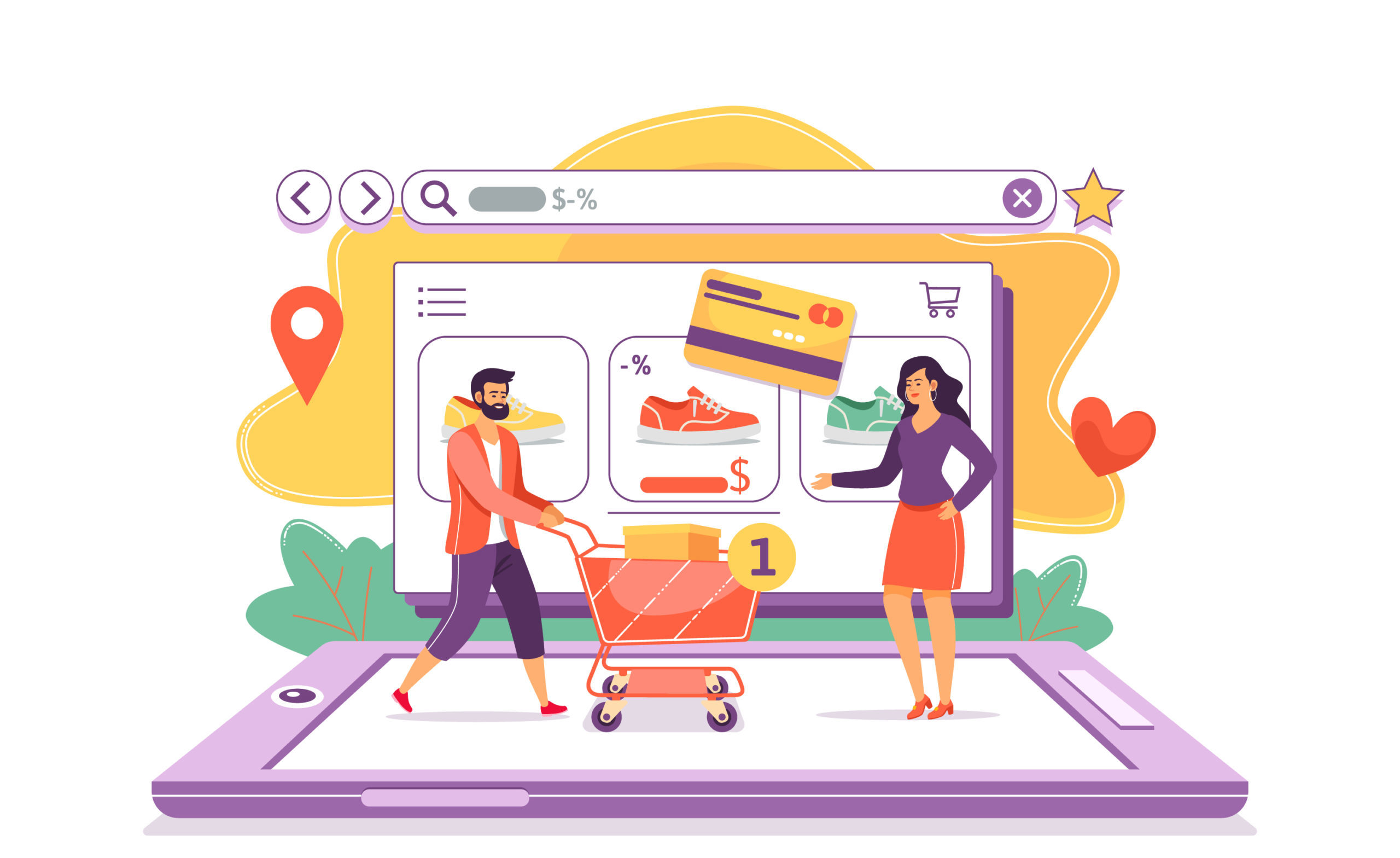
E-commerce platforms are still the main way people shop online
Take the products on your physical shelves digital and combine them with digital marketing to reach every potential customer proactively and effectively. Use Google Shopping ads to showcase your most appealing products.
First, a look at consumer shopping trends and behaviour
Consumers no longer just go online; they live online (and that probably includes you too).
Today’s consumers rely more and more on searching online, especially now that the internet is so widespread. Before buying something, they do a lot online.
We have also seen that 70% of consumers start with Google Search, where they begin to discover products. They browse many websites before finally deciding to place an order.
We see three major trends in consumer behaviour
1. Online shoppers are smarter and more purposeful
Purposeful means they know what they want to buy. Consumers also do their homework first: they browse different websites and compare prices before deciding to buy. Consumer behaviour has become more complex, so how we show our ads has become very important.
2. Online retail is shifting to visual search
Visual search has become mainstream, and FB/IG are the best examples. The ads commonly seen on these platforms put great weight on images and visual presentation. Google is no exception: Shopping ads also use visuals to help us solve advertising problems.
3. Consumers expect more personalised, relevant ad content on mobile devices
Using consumers’ past viewing history and purchase behaviour, Google’s machine learning serves personalised, customised ads based on the keywords consumers type into Google Search. According to Google data, mobile has a very strong influence: 49% of mobile users tend to choose to shop on their phones.

Shopping ads are a very powerful tool and ad format. In the consumer’s shopping journey, traffic that clicks through from a Shopping ad is already very far down the consumer funnel.
Shopping ads attract clicks through visuals and price. Because consumers click the ad already knowing the basic product information, they are more likely to complete a purchase, bringing higher conversion rates to the online shop.
Shopping ads reach all potential customers, everywhere
Shopping ads appear on Search, the Google Display Network, YouTube and Gmail, so they can run on a wider and more varied range of channels.

Shopping ads show the [product image], [name], [price], [merchant name] and so on.
Above all there is an image and a product title, so consumers can see at a glance what we sell. Then the price, brand, customer reviews and offers can all appear in the ad. Consumers see this information as soon as they see the ad and can then decide whether to click through to look at the product.
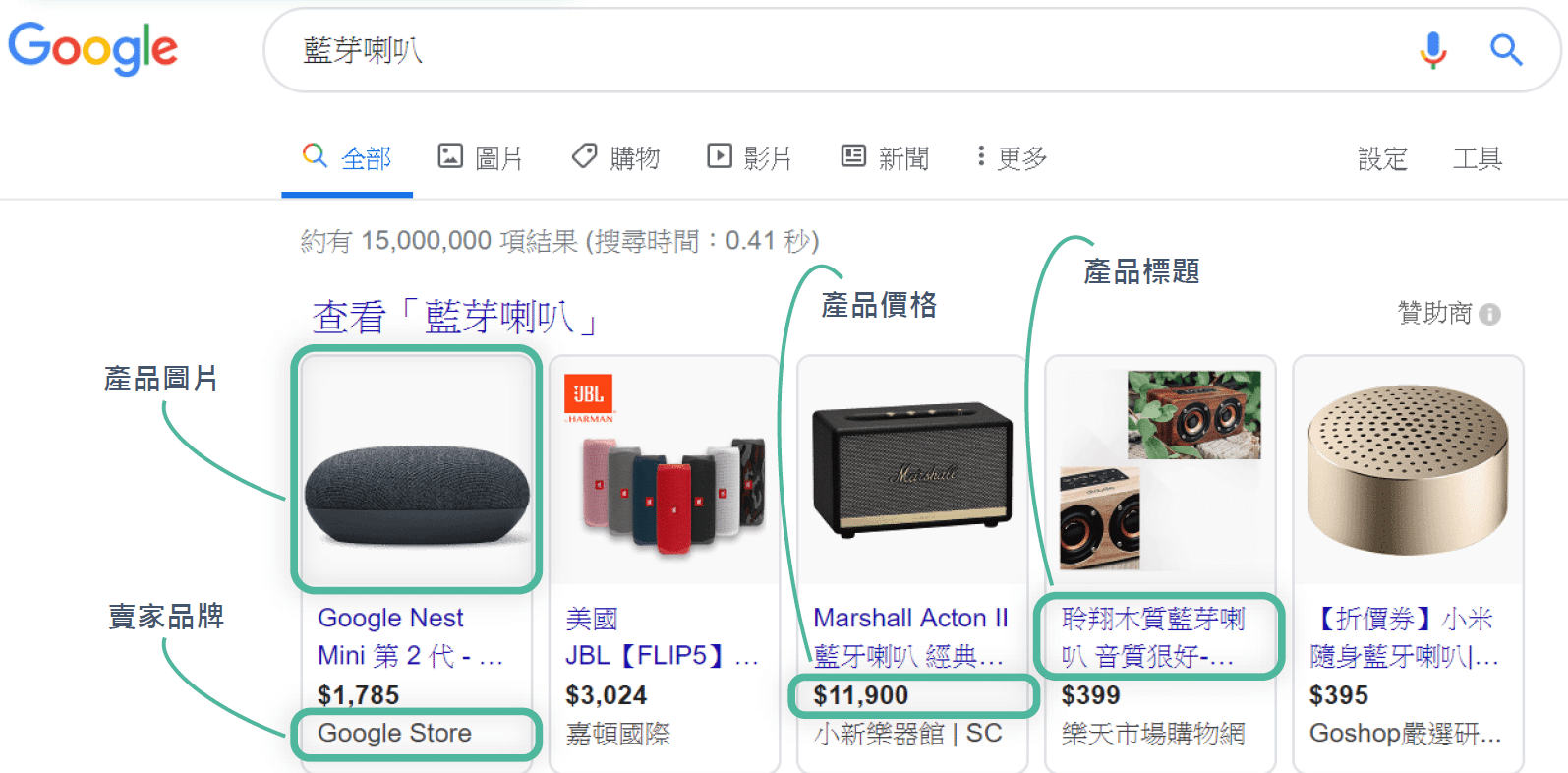
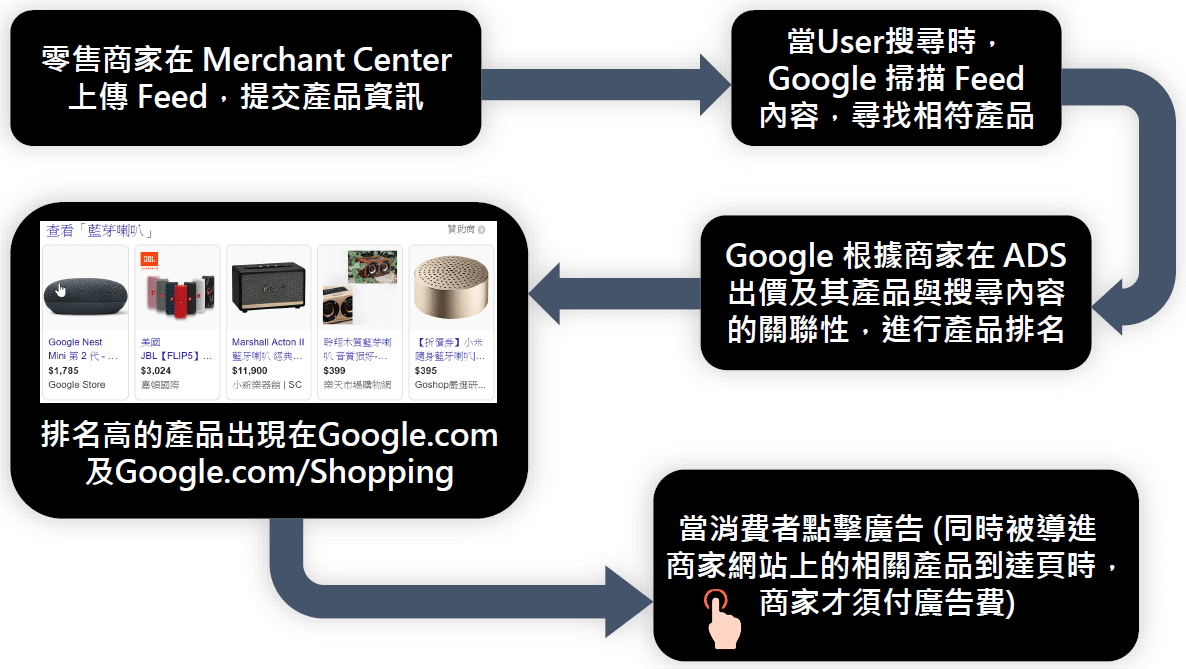
Diagram of how Shopping ads work behind the scenes
Create and verify a Google Merchant Center account
Step 1. Go to google.com/merchants and sign up for a free Merchant Center account.
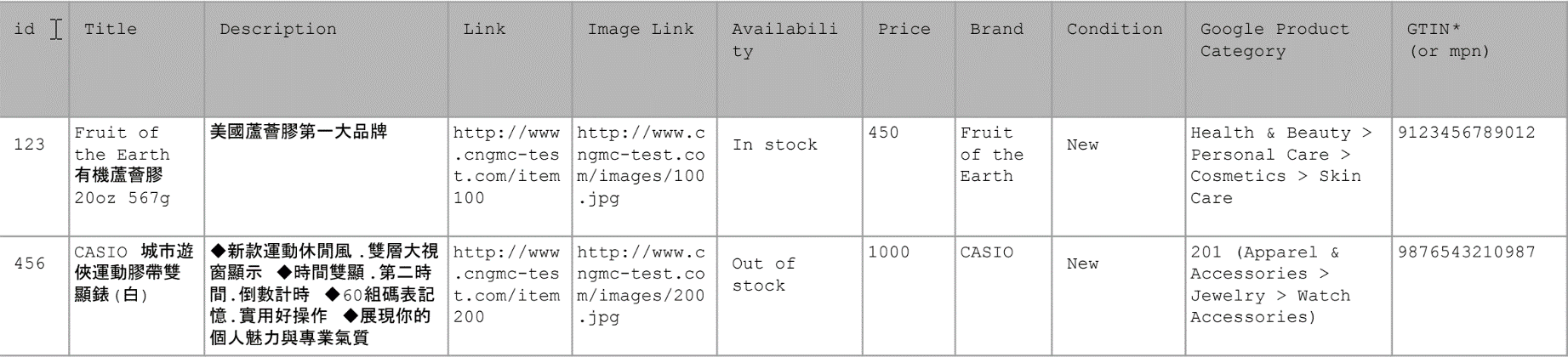
Step 2. Create a Google product feed (the file can be .txt, .xml or a Google Sheet).

What does a Google product feed need to include?
GMC Shopping ads policy centre
This lists the rules you must follow when running ads on the Google Network. It covers four main areas:
- Prohibited content: content that cannot be advertised on the Google Network (as mentioned in the previous article)
- Prohibited practices: things you cannot do when advertising with Google
- Restricted content: content that can be advertised, subject to specific restrictions
- Editorial and technical requirements: quality standards that ads and websites must meet
For full details of the prohibited content rules, see: https://reurl.cc/7XjVGQ
Shopping ads use machine learning and remarketing to reach key customers

The advantage of Shopping ads is that they use machine learning to analyse audiences, products and signals from consumers themselves. They analyse consumers’ behaviour and habits as well as product sales: which products sell well and which products suit which audiences can all be analysed.
For every auction, they can bid and control spend accurately, showing the right product to the right person at the right time. That is what makes Shopping ads so powerful.
We hope this guide to taking physical products digital helps brands optimise their ads and review performance with a clearer direction. If you need help or have questions about planning your advertising strategy, get in touch.