What is Power Pairing?
Power Pairing is an ad strategy that combines two core Google Ads features, Search ads and Performance Max, to maximise ad performance and improve return on investment. Supported by AI, the two ad types complement each other and increase conversions more efficiently.
- Search ads: use AI with broad match and Smart Bidding to expand keyword coverage automatically, so ads reach more relevant searches.
- Performance Max: fully AI-powered, it automatically optimises ad delivery and uncovers opportunities beyond search behaviour, creating synergy with Search ads.
Power Pairing optimisation guide: key strategies for better ad performance
To get the most from Power Pairing, you can follow a four-step optimisation guide to improve its results further. From capturing demand to precise conversion, it helps brands gain an edge in a competitive market and improve return on ad spend.
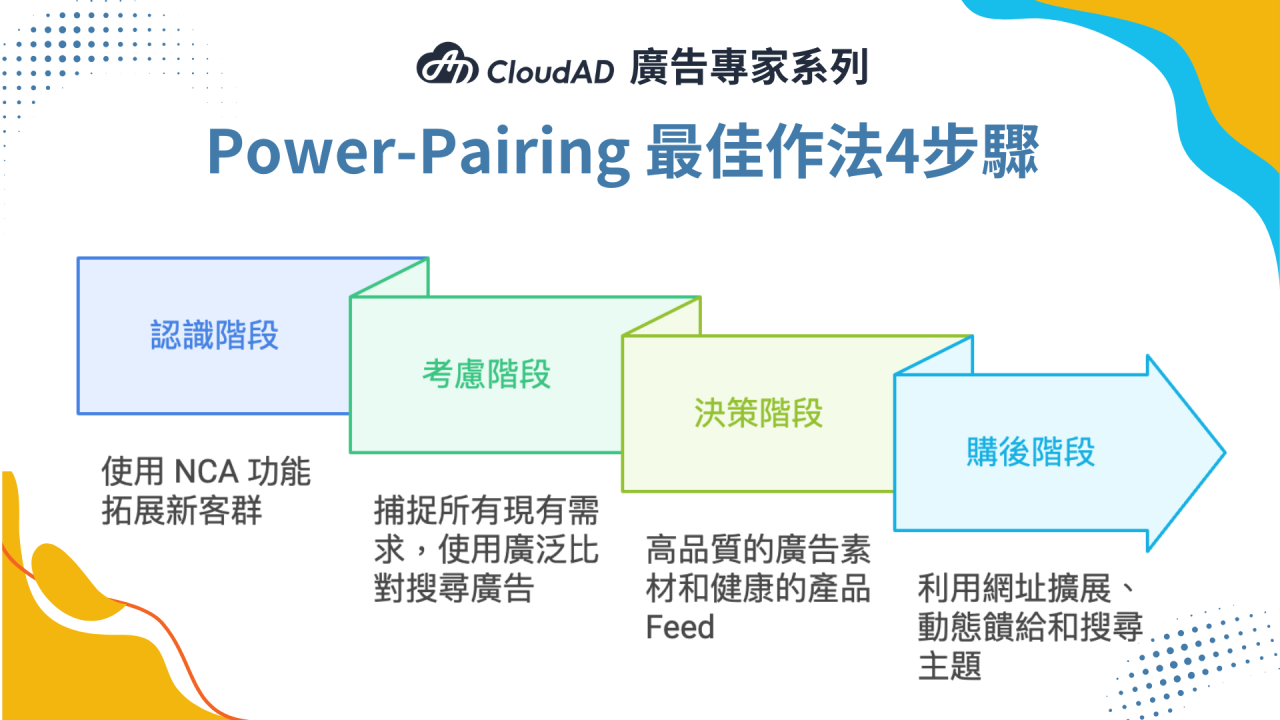
- Awareness stage: use NCA to reach new customers
Use the new customer acquisition (NCA) goal in Performance Max to focus on finding new customers who have never interacted with the brand, and use audience signals to reach potential customers precisely. - Consideration stage: capture all existing demand
Use broad match Search ads to maximise reach, so your ads cover a wide range of search terms, including long-tail keywords you have not anticipated. This helps capture customers’ latent needs and prompts further consideration. - Decision stage: high-quality creative and a healthy product feed
When customers reach the decision stage, they already have some options and are ready to decide what to buy. Use high-quality text, image and video assets that clearly communicate the value of your product or service and closely match users’ search intent. Also keep your product feed complete and accurate, so dynamic ad content matches the actual products, improving the customer experience and speeding up decisions. - Post-purchase stage: use final URL expansion, dynamic feeds and search themes
Final URL expansion, dynamic feeds and search themes can further increase engagement with users and provide more useful information, such as promotions and related product recommendations. This helps improve the user experience, encourage repeat purchases and strengthen customers’ brand loyalty.
Conclusion
The Power Pairing strategy lets advertisers reach existing customers and also attract future prospects and new customer groups effectively. Broad match expands search coverage, and the NCA setting in Performance Max helps achieve two goals at once: a higher share of new customers and a lower customer acquisition cost. However, Power Pairing still needs ongoing optimisation and adjustment to keep delivering the best results. If you need help with further optimisation, get in touch.