Background and purpose of the YouTube diamond communication model
As YouTube has become the world’s largest video platform, brands can use it to reach a wide range of consumer groups. During the year-end shopping season in particular, brands need exposure more than ever. The YouTube diamond communication model gives brands a clearly layered marketing strategy that moves from top to bottom through brand exposure, reach, views and engagement to final conversion. The model lets brands manage their strategy precisely at each stage of the marketing process for a well-rounded result.
The four stages of the YouTube diamond model
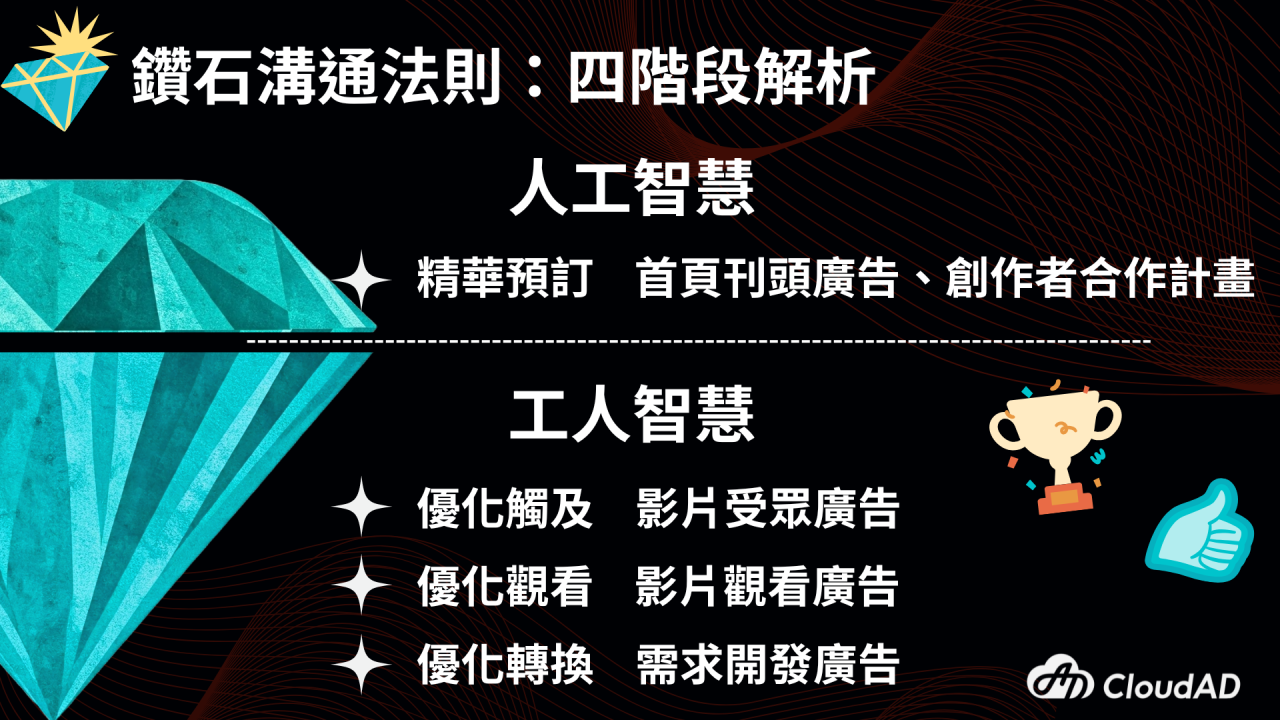
The diamond model is divided into four stages based on audience behaviour and brand goals. Each stage suits different ad formats, making sure campaigns achieve the best results:
1. Reservation
The reservation stage focuses on highly customised content placements. The goal is to reach the brand’s core audience with exclusive exposure opportunities. Suitable formats include Creators Connect, a creator partnership programme through which brands can work with creators and appear directly in the video content consumers already know, building brand affinity and trust. YouTube Masthead is another powerful tool: this high-visibility home page placement can raise brand awareness quickly.
2. Reach
The reach stage aims to extend the brand’s reach so more potential customers see its message. We recommend Video Reach Campaigns, which reach large numbers of potential customers effectively. They can use different ad formats flexibly based on target audience behaviour (such as bumper ads and non-skippable in-stream ads). These formats cover different user behaviours and viewing habits. Combining several formats helps advertisers make sure their ads reach audiences across different viewing situations and increase brand exposure.
3. View
The view stage focuses on increasing video view rates and embedding the brand message in viewers’ memories. Video View Campaigns work well here. TrueView ads are charged per view and encourage viewers to choose to watch, leading to better engagement. These ads usually target audiences more likely to watch and take an interest in the brand, improving viewing results.
4. Action
The action stage aims to lead viewers to take real action, such as buying or subscribing. In the past we recommended Video Action Campaigns, but from the second quarter of 2025, Google will replace them with Demand Gen. On the creative side, Demand Gen can optimise video and image assets together. According to Google’s tests, adding image assets gives advertisers 20% more conversions at the same CPA. Demand Gen can also run on placements such as Gmail and Discover, so ad communication is not limited to video viewing, helping viewers move from watching content to taking concrete action and increasing the chance of orders.
Practical advice for maximising year-end results
To get the most out of the diamond model during the year-end marketing peak, brands can fine-tune everything from creative planning and frequency settings to data optimisation:
1. Plan creative and frequency
Design different creative formats to match audience needs at each stage of the campaign. Early on, prioritise content that drives exposure and reach, using Masthead, Video Reach Campaigns or Creators Connect to attract large volumes of exposure and traffic. In the middle stage, use Video View Campaigns to strengthen viewers’ willingness to watch and keep deepening brand impressions. In the final stage, use ads with clear calls to action, such as Demand Gen, to convert interested prospects, completing the marketing funnel.
2. A/B testing and data optimisation
To improve marketing results, brands should run A/B tests regularly to find the best creative and delivery strategy. Testing and comparing different ad formats, video lengths and copy styles gives a more precise understanding of consumer preferences. Adjust your ad strategy based on A/B test results and keep tracking key metrics such as view rate and conversion rate to find the combination that delivers the best results.
3. Multi-platform integration and cross-device reach
As consumers watch YouTube on more devices, brands should consider running ads across platforms such as connected TV, desktop, mobile and tablet to increase coverage and strengthen cross-device continuity. This kind of multi-platform integration makes sure viewers encounter the brand message at different times and on different devices, making the brand more memorable.
4. Dynamic creative updates and topical content
During the year-end season, consumer needs change quickly. Brands can use dynamic creative updates to add the latest product offers and promotions to their ads in good time. This keeps ad content relevant to what consumers need right now and increases opportunities for engagement. Content linked to trending topics is also more likely to attract viewers quickly and draw attention.
Use the diamond model flexibly to reach your marketing goals
The YouTube diamond communication model provides a flexible, systematic communication framework. It suits brands and industries of all kinds and can be adjusted precisely at different marketing stages for the best results. By using ad formats and strategies at each level, brands can increase exposure, deepen engagement and drive conversions during the year-end peak, and ultimately reach their marketing goals. With this model, brands can hold their ground in a competitive market and build deeper, lasting connections with consumers.