Recently we have been receiving a steady stream of enquiries about websites, traffic, data and performance.
Brands may find that their website traffic has changed, or that ads bring clicks but not the actions they expected. Some have built up a lot of data but still aren’t sure what the numbers are telling them, or their data isn’t complete enough to analyse further.
Behind these questions is something that is already happening:
the way people look for information is now very different from how it used to be.
In the past, if you wanted to buy an air conditioner, replace a TV or plan a trip, the first thing you usually did was open Google, type in a few keywords and compare the search results one by one, or visit a price comparison site.
Now, many people may ask ChatGPT, Gemini or Claude first.
“Which robot vacuum is best for a household with pets?”
“What kind of mattress suits someone who often gets a sore lower back?”
“Visiting a city for the first time, which area is the most convenient to stay in?”
We no longer just type in keywords. We have started describing a whole situation and having a conversation with AI.
For me, AI is also a tool for organising my thoughts.
Sometimes, just like now, I speak my thoughts out loud, and as I talk I hear what I’m thinking. The AI’s response then comes back to me, prompting me to rethink, digest and judge.
It is not just a search tool. It is increasingly becoming the way people understand problems, compare options and reach decisions.
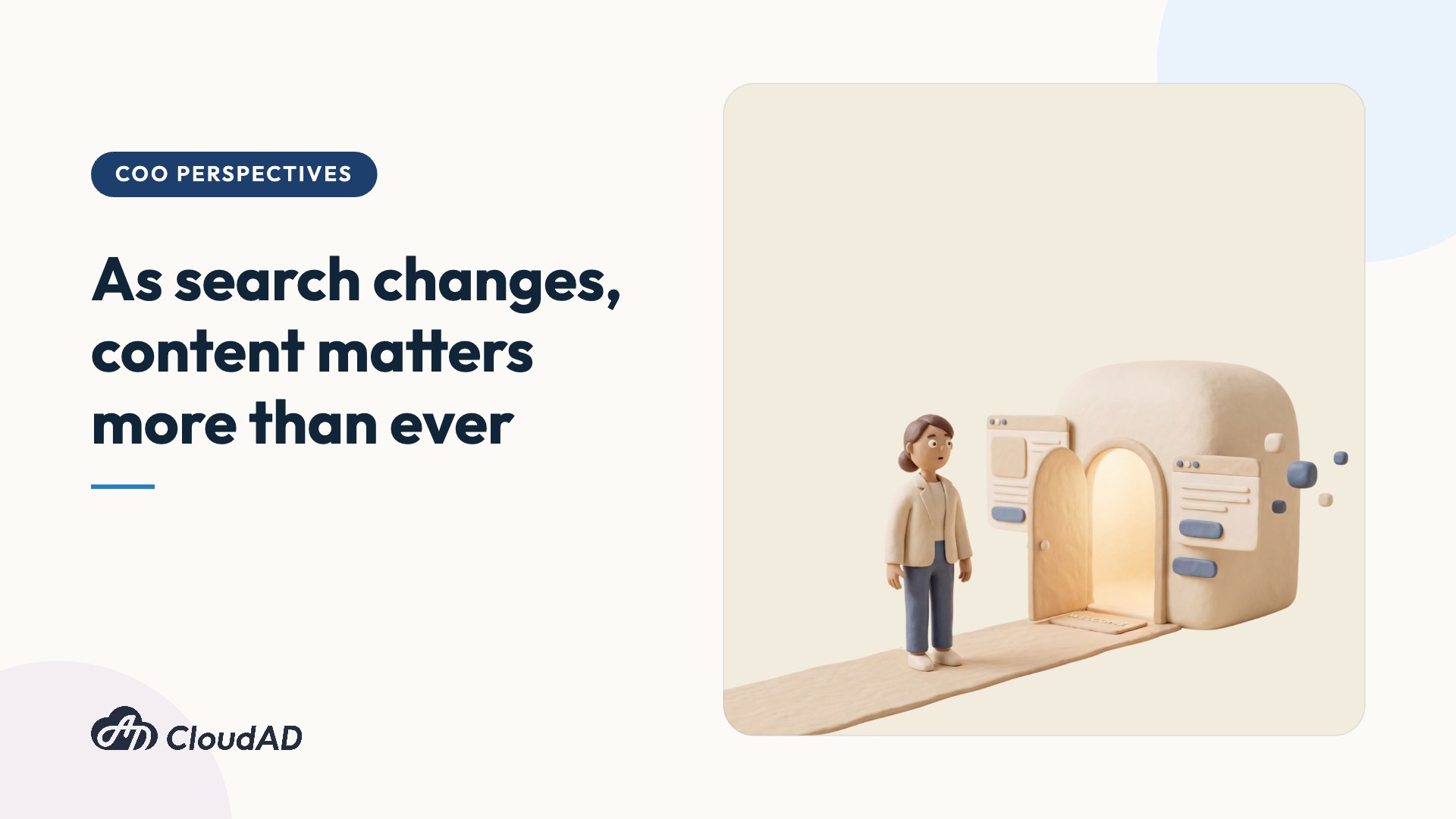
The entry point has changed, but the importance of content hasn’t
From Google Search to AI conversations, the paths people take to get information are changing.
But one thing has never really changed, and that is content.
We don’t necessarily remember a brand because it has the biggest advertising budget, or because it shows up the most.
More often, it’s because it once stayed in our memory through a line, an image or a melody.
From the 愛肝 liver tonic jingle about one bottle for twenty dollars that many of us grew up hearing, to the 雨傘標 (Umbrella brand) advertising song and the 斯斯 cold medicine slogan, many people can still finish the line naturally even after many years.
These ads were made in a media environment completely different from today’s, but they all achieved one thing:
they turned the message the brand wanted to convey into content people could remember or cared about.
There is more information now than ever, and it is spread across more channels.
The same person may search on Google, watch short videos on Instagram, look for reviews on YouTube and then ask AI to help summarise the differences.
The question brands face is no longer just “are we being seen?” but, going further, whether they are counted in the answer when customers ask AI “who should I go to?”.
Before thinking about why consumers would stay once they see a brand, brands may first need to answer another question:
where do people actually see you today?
Further back, we might have found the shops and companies we needed through newspaper ads, a thick Yellow Pages directory or by calling the 104 directory enquiries service. Later, Google Search became the main entry point for many people looking for information.
Today, a person may first see some content on social media, then search for the brand name on Google, watch reviews on YouTube, and finally ask ChatGPT, Gemini or Claude to help organise and compare.
There is no longer just one path by which a brand is discovered.
Content matters, but good content does not automatically appear in front of the right people just because it is well written. Brands still need to think about which media, and which situations, will let users at different stages see them.
Some media create the first encounter, some content helps users understand the differences, and some touchpoints gradually build trust.
So what needs managing today is not only what the brand says, but also where it says it, and whether it can convey consistent brand values across different entry points.
And once consumers actually see the brand, the next question is:
what reason do they have to stay?
Bringing people to the website is only the start of the journey
Recently we needed to replace a mattress at home, so I looked at quite a few brands. At the same time I’ve been researching robot vacuums.
In the top positions of Google search results, I often see ads or sponsored content. This is the value of paid media: when consumers have a need and are actively looking for answers, it gives brands the chance to appear in front of them first.
But now that search, social media, video platforms and AI are all entry points for information, how a brand is seen can no longer depend on a single medium. Different channels need to connect with each other so that users can move from first contact towards understanding, comparison and trust.
But once someone clicks through to the website, that is when the real test begins.
- Does the website quickly help me find the answer to my question?
- Can I understand the differences between products?
- Is it talking about what the brand wants to say, or what I actually care about?
- Does it understand what I’m comparing, hesitating over or even worried about?
Visual design, loading speed, navigation, wording, product information and a sense of trust: any one of these can affect whether a user is willing to keep going.
An ad can bring a click, but it cannot complete the entire customer journey on its own.
If the website doesn’t hold on to users, even the most precisely targeted traffic may leave quickly.
Many brands have already installed GA and built up plenty of data on views, time on site, interactions and conversions, but still don’t know how to read these numbers, let alone what to adjust next.
GA can help us see what is happening on the website, but it won’t automatically give us the answers.
For example, a user leaving on a certain page doesn’t necessarily mean the page itself has a problem. They may have already found the information they needed. Or the content may not have answered their question, the page may have loaded too slowly, the information may have been too complex, or the message in the ad may not have matched what the website actually showed.
The real value of data is not just producing a report. It is helping brands ask better questions, and gradually understand where users come from, what they see, where they stop, and why they don’t go further.
Good content isn’t expressed the same way for everyone
Some people are moved by a line of text, others notice the visuals first. Some like minimalism and white space, others prefer bold colours and strong contrast.
So there has never been a single right answer for content.
But whatever the style, truly valuable content usually has one thing in common:
it doesn’t rush to introduce itself. It first understands the other person.
It understands why users came, what they are looking for, what questions they have, and what might stop them from taking the next step.
Content is not just articles or copy. It also includes the website’s information architecture, how products are explained, how data is presented, and whether the brand can answer users’ questions in a consistent way.
Now that AI has started organising, summarising and recommending information, brand content can’t rely on attractive adjectives alone.
Brands need to explain more clearly who they are, what problems they solve, who they are right for, and why they deserve to be trusted.
Because whether the final entry point is a search engine, a social platform or AI, the content, data, expertise and credibility a brand builds up over time will still affect whether it can be understood, found and trusted.
This also echoes E-E-A-T, which Google has long used to assess content quality: Experience, Expertise, Authoritativeness and Trustworthiness.
E-E-A-T is not a single ranking score. It is a set of important principles that help content creators re-examine whether their content is genuinely useful and reliable and puts users first.
Now that AI is increasingly involved in organising, summarising and recommending information, these content fundamentals have not disappeared. They matter even more.
From traffic to understanding, from content to value
At CloudAD, we care about more than how much traffic a website gets, how many clicks ads receive, or how much the numbers on a report have gone up.
We want to go further and understand:
- Where does this traffic come from?
- What do users do after they arrive on the website?
- At which step do they stop, and at which step do they leave?
- Do users actually understand the value the brand wants to convey?
Media gives brands the chance to be seen, content decides whether the brand can be understood, and data helps us see how users respond. These three things cannot exist in isolation.
Brands can’t just ask whether their website has traffic. They also need to understand where they are seen, what users see, why they choose to stay, and why they choose to leave.
AI is changing search, and it is changing how brands and consumers meet. But the faster entry points change, the more brands need to return to one basic question:
when people find you, what are you ready to show them?
Perhaps it’s time to open your own website again, set aside for a moment how well you know your brand, and walk through it once more from the point of view of a first-time visitor.
See whether it is clear, whether it is sincere, whether it answers questions, and whether it is worth staying on a little longer.
CloudAD looks forward to getting to know the value each brand truly wants to create and, across media, websites, content, data and user behaviour, finding together the right way for the brand to be seen, so that every time it is seen, it has the chance to be understood, trusted and remembered.