KEY POINTS
Key points
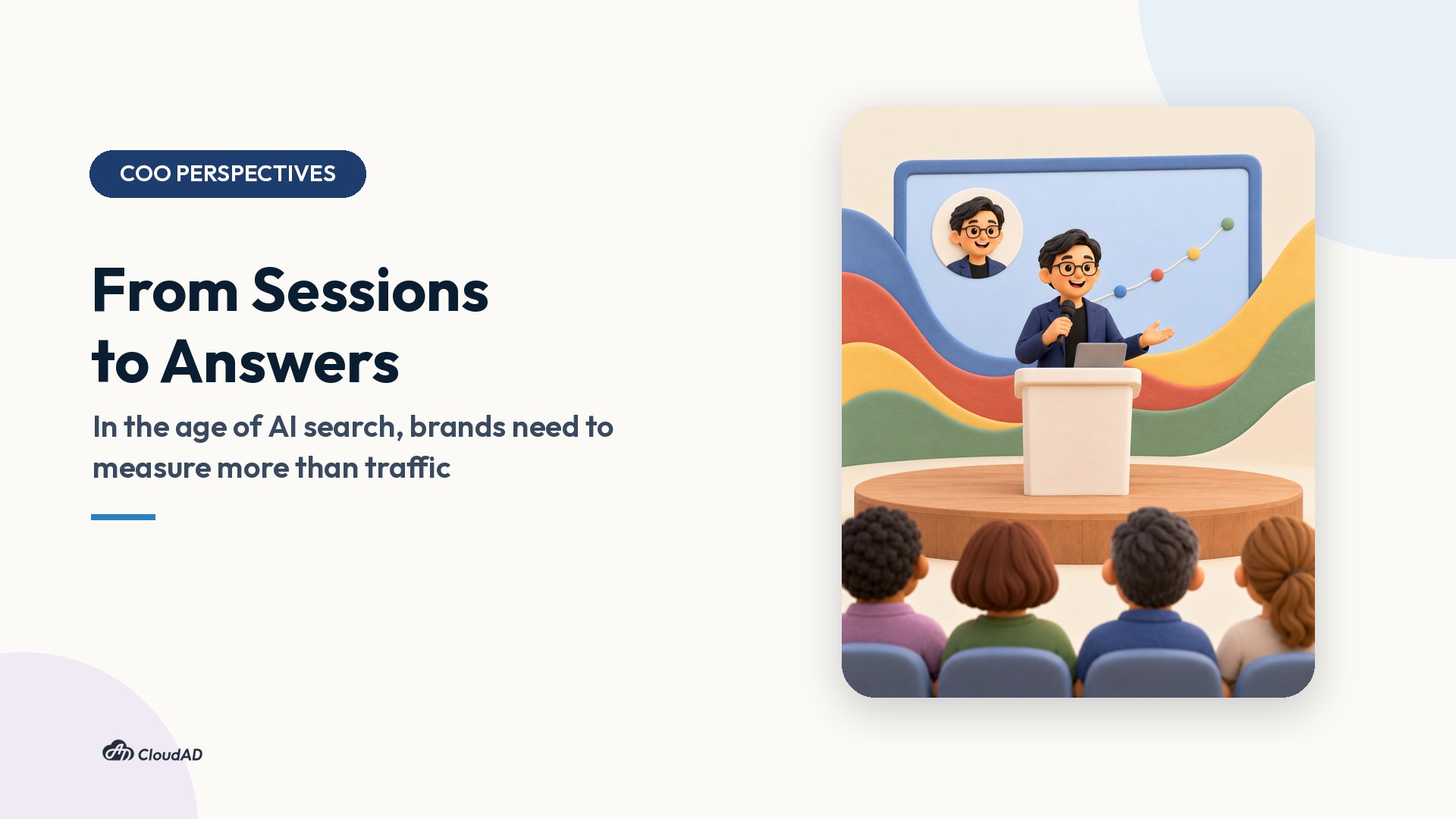
- On 8 October, Sega Cheng, Chairman of iKala Group and CloudAD, spoke at the Google Analytics APAC Partner Summit in Singapore.
- In the age of AI search, Sessions and Answers are two ways of looking at the customer journey. Some contact leads to a website visit; some stays inside an AI answer.
- On-site measurement starts with data that can be trusted and that supports decisions in time. In a news publisher case, data latency fell from about 48 hours to under 30 minutes.
- Off-site, it is possible to track how AI mentions, cites and describes a brand, but these monitoring results cannot be read as the number of people actually reached.
On 8 October I was in Singapore for the Google Analytics APAC Partner Summit, which brought together partners from 34 countries online and in person, with about 150 people in the room. It made me rethink one thing: when the way people find information changes, has the way brands judge performance changed with it?
Sega Cheng, Chairman of iKala Group and CloudAD, gave a talk titled Sessions and Answers.
The talk was covered by TechNews and Commercial Times (both in Chinese).
The title captures a change that is already happening. Brands have been used to working backwards from website visits: where customers came from, what they looked at, whether they converted. Today a customer may already have met the brand and compared options inside an AI answer without ever clicking through.
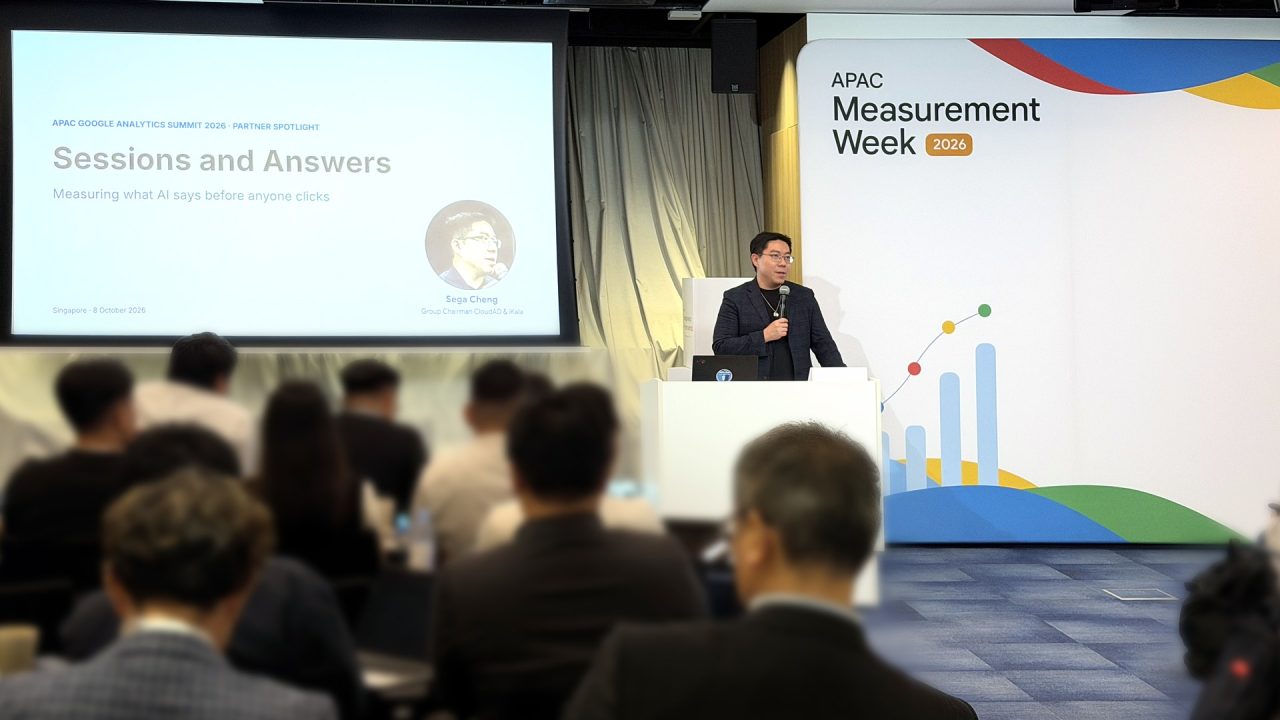
In the same journey, some contact leaves no click
Website traffic reflects what happens after people arrive, but it does not cover every brand contact.
People can ask Gemini, ChatGPT or Claude directly, or get what they need from an AI Overview in search results. If they read the answer and leave, the brand’s website records no visit.
Sessions and Answers reminded me to keep both situations in view: interactions that reach the website and leave a session record, and contact that happens inside an answer and may never produce a click.
Both can happen in the same person’s journey. Sega noted that an AI answer can trigger the next search, and search results can send people back to AI with a follow-up question. What brands need to understand is how these contacts interweave, rather than explaining every customer reaction through the rise and fall of website traffic.
On-site: trustworthy data first, then decisions can keep up
Data has to stand up to checking first, and then reach the people making decisions in time.
In the talk, Sega shared the team’s work with a major news publisher. At the time, the newsroom waited about 48 hours for the complete data it needed, yet the first few hours after a story goes live are when the team has to understand reader response and decide on the next content and promotion.
The team broke each story’s interactions into measurable items and used GA360 with BigQuery streaming to cut data latency to under 30 minutes, so editors could follow what was happening while readership was still moving. According to the case results shared in the talk, 60 days after launch, with no increase in media budget, new users and active users each grew by about 25%, and sessions by about 15%. The results are also summarised in the media client case.
Faster data still needs checking
What I care about is whether these numbers can support the newsroom’s decisions in the moment. Duplicated events, inconsistent naming and missing parameters can all pull analysis away from the question it was meant to answer. Delivering data faster does not remove the need to check it first.
Sega also said on stage that AI performs only as well as the data it reads. It made me think that as analysis and answers get faster, data quality problems also reach later decisions faster. Tools can shorten the wait, but the team still needs to know where a number comes from and what it means.
Off-site: how AI introduces a brand also needs watching
GA4 can identify some traffic that arrives from AI assistants; brand contact that never reaches the site needs other ways of observing.
In a May 2026 update, Google added an AI Assistant channel. When referral information matches a recognised AI assistant, the visit is grouped into this channel, making it easier to compare traffic from sources such as ChatGPT, Gemini and Claude.
This helps analyse visits that come from AI, but it still relies on traffic that can be identified on arrival. If a customer only sees the brand in an AI answer and does not click through, GA4 cannot record that contact directly.
Watching how AI describes the brand
In the second half of the talk, Sega demonstrated Kuroma, which looks at how AI understands and introduces a brand. According to Kuroma’s product information, what it can track includes:
- Whether the brand appears in answers on Gemini, ChatGPT, Claude, and Google’s AI Overviews and AI Mode, and whether its website is cited.
- How AI describes and rates the brand, and how competitors perform on the same prompts.
- Whether the website’s content and structure help AI read and cite it.
- Whether AI produces false information about the brand, together with web sources that can be checked.
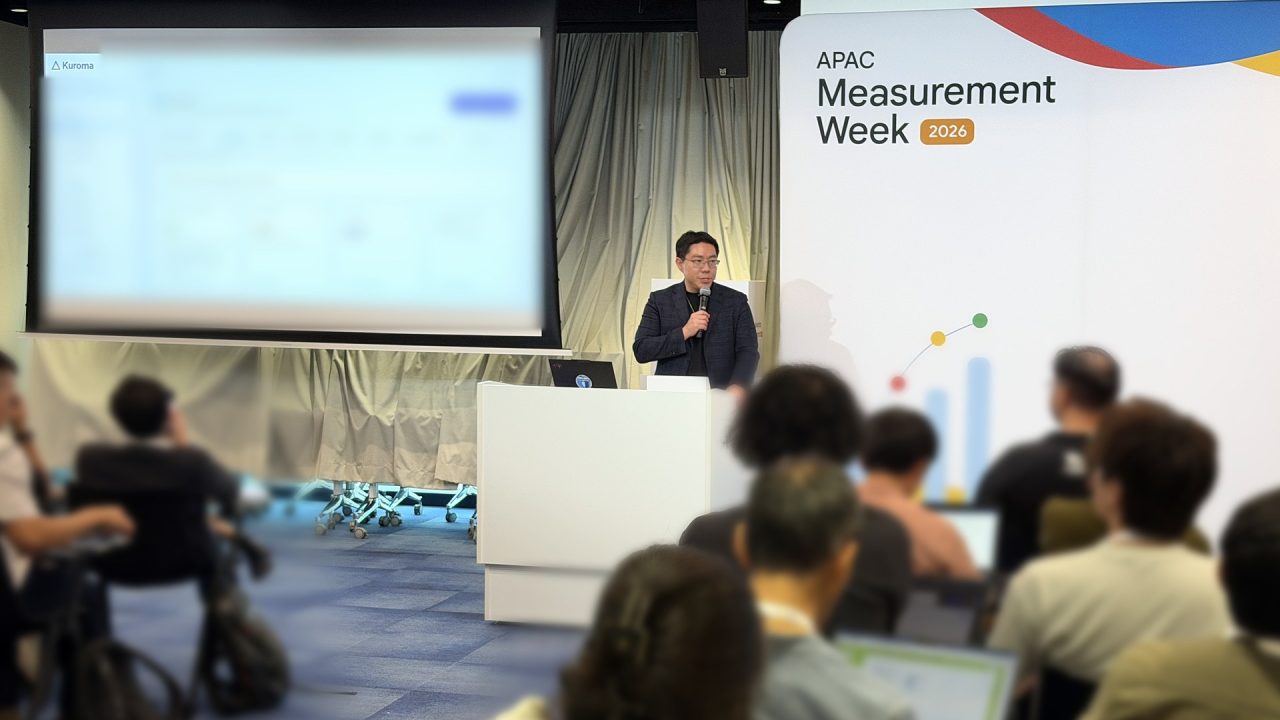
There is a measurement distinction here. Kuroma observes AI answers by simulating buyer personas and set prompts. The results can track changes in brand mentions and citations, but they are not a record of what each consumer actually saw. Mention counts cannot be read as audience reach either.
In practice, I would compare these observations with Google Analytics and Google Search Console data. How AI describes the brand, how the brand appears in search results, and what visitors do after arriving each answer a different question. Being clear about what each one means comes before discussing next steps.
Three places for businesses in Taiwan to start
Check data quality and separate the metrics first, then build a steady way to watch the questions customers ask.
During these two days in Singapore, I kept thinking about where these changes meet the daily work of businesses in Taiwan. I would start with three things.
- Check whether existing data can be trusted. Run a tracking health check to find duplicated events, inconsistent naming and missing parameters, and confirm that key events really map to business questions. With these basics in place, advanced analysis has something to stand on.
- Read metrics from different sources separately. GA4 sessions and key events, Search Console impressions and clicks, and brand mentions and citations in AI answers each have their own definitions and scope. Search Console reflects performance in search results and cannot stand in for on-site conversion data. For those metrics, see Search Console basics: impressions, clicks, CTR and average position (in Chinese).
- Keep tracking the questions customers are likely to ask. Beyond keywords, list what customers ask when they learn about a product, compare options and get ready to buy. Fixing the prompts, platforms and conditions, then checking how the brand appears in answers, gives a sounder basis for comparison than asking an AI once in a while.
Frequently asked questions
Website traffic, search performance and AI answer monitoring each have their uses; the question decides the metric.
Will AI search replace traditional search?
It is too early to treat them as an inevitable replacement. Based on what was shared at the summit, people may move back and forth between AI answers and search. Brands need to watch both on-site behaviour and information contact that brings no click.
We already have GA4. Do we still need to measure AI visibility?
To understand how AI introduces the brand, this kind of observation needs to be added. GA4 can analyse identifiable traffic from AI sources, but it cannot directly say whether the brand is mentioned, or described correctly, in AI answers that bring no click.
Are GEO and SEO completely different things?
They share a foundation: clear content, reliable information, and a website that can be accessed and understood. Google’s guidance on AI features also says existing SEO best practices still apply to AI Overviews and AI Mode. GEO additionally looks at how a brand is mentioned, cited and described in generative answers, and different platforms still need to be watched separately.
What does it take to cut data latency from 48 hours to 30 minutes?
The case shared here used GA360 with BigQuery streaming, after events, parameters and data flows had been planned and tested. Thirty minutes was the result in that case; how fresh other sites’ data can be still depends on data processing and report design.
The summit brought me back to two questions clients often ask: can this number be trusted, and what decision can we make next?
Brand measurement is widening, and answering those two questions has not become any lighter. For me, the place worth starting is to be clear about what existing data can explain and what it still cannot see, and then decide which observations to add. To talk about where a business could start, get in touch.
Further reading
- When customers ask AI “who should I hire?”, is your brand in the answer?
- As search changes, content matters more
- The two-month self-check: when Search Console impressions hit zero
- Media client case: data latency from 48 hours to 30 minutes
References
- iKala, About iKala.
- Google Analytics, What’s new in Google Analytics, updated 13 May 2026.
- Kuroma, Product and methodology.
- Google Search Central, AI features and your website.
- Search Engine Journal, Google Analytics Adds AI Assistant As Default Channel Group, May 2026.
- INSIDE, iKala Connection Day: new GEO platform Kuroma launches (in Chinese).
- TechNews, 流量指標失靈?iKala 程世嘉:零點擊時代「品牌決戰點從進站前開始」 (in Chinese), 14 October 2026.
- Commercial Times, iKala暨CloudAD程世嘉登Google亞太高峰會 談AI搜尋時代品牌衡量 (in Chinese), 14 October 2026.