E-commerce transaction value has grown steadily across industries in recent years, and it boomed during the pandemic in particular. Shopping this way is now very common, and more and more shops and companies are creating their own online stores, hoping new channels will bring in more revenue.
What e-commerce operators care about most is website revenue and which channels bring users to the site. Which pages users browse and where they spend the most time are also key concerns. Google Analytics 4 (GA4) can answer all of these questions. But can a successful e-commerce business be judged only by purchases (revenue)? Who has browsed my store? What marketing strategies should I use to increase sales? Anyone running an online store, or planning to start one, has probably asked these questions. Let’s switch to the consumer’s point of view and look at how consumers interact with the website to find some answers.
The consumer journey
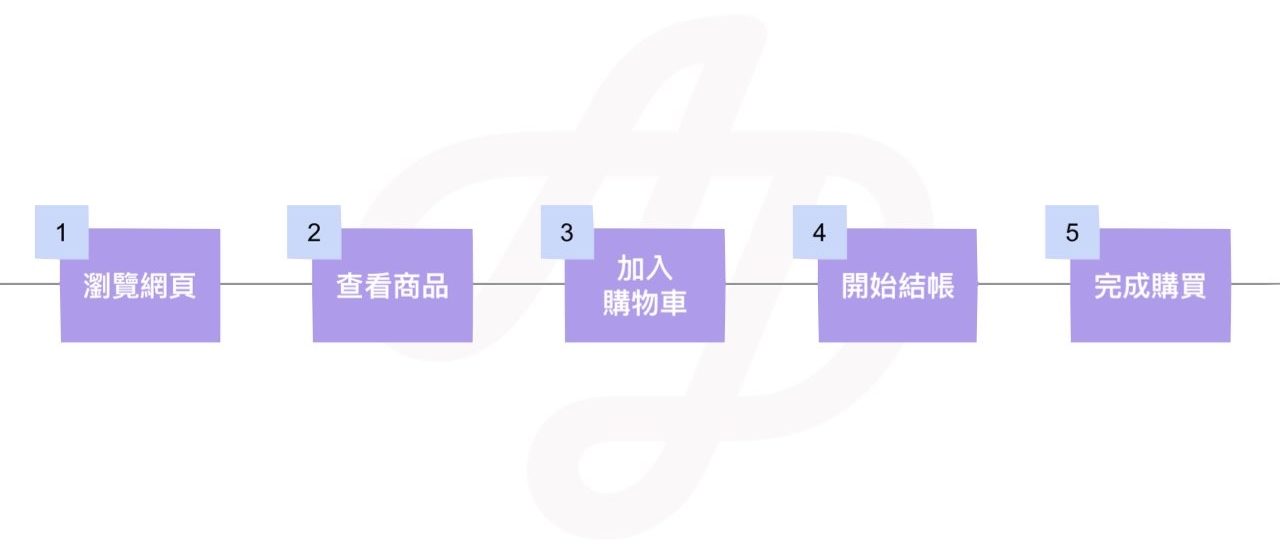
A consumer’s behaviour on an e-commerce website
This sequence of actions contains a lot of information left by users, all recorded in GA4. Besides the page visits, time on page and traffic sources produced by browsing, and the revenue produced by purchases, what useful information does each of the other actions contain? Let’s look at them one by one.
Viewing products: understanding users’ interests and needs
When consumers arrive on an e-commerce platform, they see product listings, then click on products they are interested in to view the details on the product page. At this point, viewing a product generates data such as:
- Product category: the product categories consumers browse. This helps businesses understand which categories are more popular and analyse future sales trends.
- Product views: the total number of views of a product page. This metric shows which products attract the most attention, so businesses can adjust their promotions.
Tracking product views shows how interested consumers are in products. Businesses can use this data to optimise product page design or pricing strategy, and analyse popular products and categories to run discounts or promotions on them and use them as hero products to attract more of their target audience.
Adding to basket: an early sign of purchase intent
When consumers want to buy a product and click the add to basket button, an add to basket action is recorded, along with related data such as:
- Number of times a product is added to basket: how many times a product has been added to the basket. The higher the number, the stronger consumers’ intent to buy that product.
- Product variant: the variant consumers choose (such as size or colour). This shows how popular different versions of a product are, helping businesses adjust restocking and pricing strategies. It can also inform future product development.
Add to basket is one of the most important conversion actions to track, because it directly reflects purchase intent. Look at it alongside the stages before and after it, compare the numbers between stages, and work out the causes of drop-off points in the buying journey (see the note below).
Beginning checkout: the last observation before a transaction
After adding products to the basket and clicking the checkout button, consumers enter the begin checkout stage. Here they need to fill in payment and delivery details, and related data is recorded, for example:
- Number of items at checkout: the total number of products the consumer has chosen at checkout. This reflects consumers’ purchasing power and preferences.
- Payment method: the payment method chosen (credit card, third-party payment platform, cash on delivery and so on). Tracking this helps brands understand which payment methods consumers use most and make sure convenient options are available to increase completed purchases.
- Delivery method: the delivery method chosen (such as courier, home delivery or in-store pickup). Understanding delivery preferences helps optimise logistics and delivery services and improve customer satisfaction.
Tracking checkout behaviour shows businesses what consumers prefer at the final stage of buying, so they can design targeted marketing, such as checkout discounts or free delivery, to encourage completed orders. Analysing different payment methods also helps businesses identify which ones have higher conversion rates, so they can work with those payment platforms on promotions that encourage consumers to complete payment quickly.
Besides the buying process above, e-commerce websites usually require users to register as members before they can complete a purchase, so registration is also a user behaviour worth analysing.
Member registration: understanding different customer profiles
Common data generated at the registration stage includes:
- User ID: the unique identifier assigned after registration. Once users log in, businesses can use the User ID to track them across platforms and devices and understand them more precisely.
- Age and gender: based on users’ age and gender, brands can run more targeted promotions, such as offering products or deals better suited to younger users.
- Location: tracking users’ region and language helps brands run regional marketing and offer localised product recommendations and content.
Tracking registrations helps businesses understand customers’ characteristics more clearly and analyse their interaction habits and purchase preferences on the website. Businesses can then personalise marketing for different customer groups and offer product recommendations and deals that better meet their needs, increasing customer loyalty and conversion rates and supporting the brand’s long-term growth.
Note: drop-off points in the buying journey
The drop-off points mentioned in the add to basket section are stages in the shopping process where consumers stop and do not complete the final purchase. For example, if certain products are often added to the basket but not bought, the price may be too high or there may be no promotional discount. High delivery costs or too few payment options can also lead consumers to give up at the begin checkout stage.
E-commerce websites should not focus only on purchases. They should use a range of data metrics to understand every aspect of user behaviour.
With this data, businesses can understand users’ needs more fully, optimise their marketing strategy and improve overall revenue and customer satisfaction.
To learn more about e-commerce tracking or how to collect this data, get in touch.