
As a brand-side marketer, do these questions often trouble you?
- Can our products or services meet market demand?
- When is the right time to promote each of the brand’s products?
- How do we collect search volumes for our brand and our competitors?
- How should we plan the timing of our advertising?
If any of these apply to you, this post is for you. It introduces a free and practical tool, the Google Ads Keyword Planner, which makes market analysis questions large and small much easier to answer.
The hidden uses of Google Ads Keyword Planner
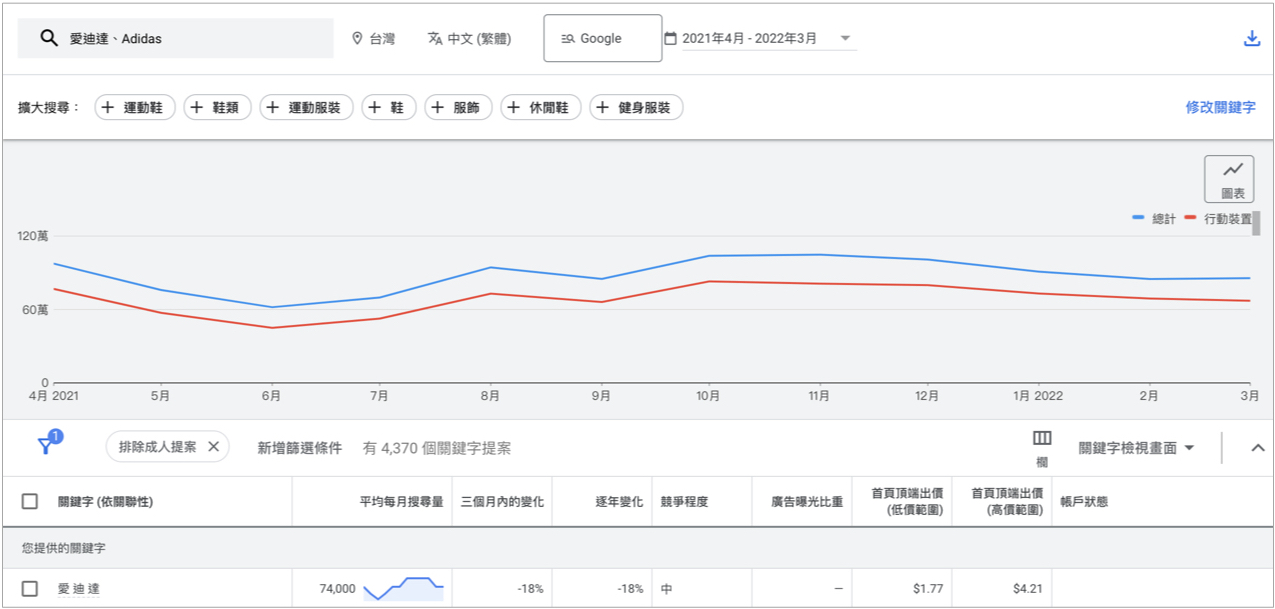
Advertisers usually use Keyword Planner in Google Ads to prepare Google keyword proposals, find terms related to the brand’s business, and quickly see what users search for and how often. But beyond this basic use, the tool also provides keyword group themes, average search volumes, and time and regional variables. Analysed further, this information provides important data to support market insights, helping brands build marketing strategies with more structure and logic.
Three core rules for analysis to complete your marketing plan
Rule 1: choosing keywords
Use different keyword groups, such as brand terms, competitor terms, product category terms and need-based terms, to estimate the size and distribution of market demand and adjust your marketing focus flexibly.
1. Assess search volume and competition
Look at how search volume is distributed across terms and how competitive the bidding is, to assess which topics the brand should focus on. For example, if competitor terms have strong search volume and the competitor has a high market share, the strategy could start with product category terms, building awareness of the brand among potential audiences from the top of the funnel.
2. Assess search trends
Watch how search volume for terms rises or falls to understand consumer needs and market trends. Here are four search volume patterns and what they mean:
- Rising stars: search volume has grown steadily over the past few months, showing real demand; an area the brand should watch closely
- Sustained risers: search volume grows steadily year on year; demand is solid
- Emerging trends: search volume has grown explosively, but how stable the demand is remains to be seen
- Declining trends: search volume falls year on year; demand is gradually disappearing

Rule 2: planning timing
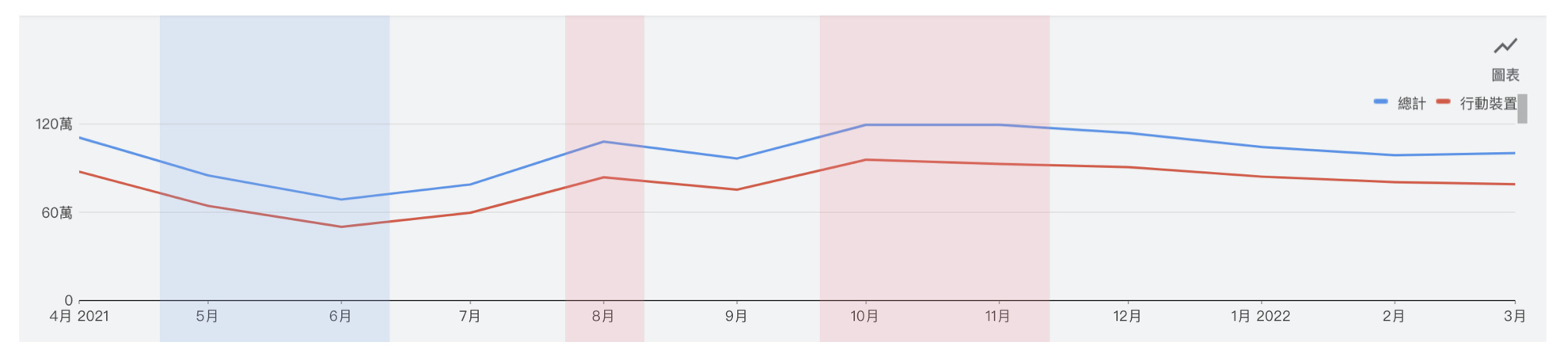
Watch how search volume for terms changes over time. This helps brands see the low and high seasons for their products or services and for market demand, or, combined with past marketing plans and market factors, find the key drivers of growth and decline in product demand to support marketing strategy.
Year-on-year (YoY) comparisons can also show annual growth for the brand and for market demand, giving a more complete picture of the industry.
Rule 3: looking at regional demand
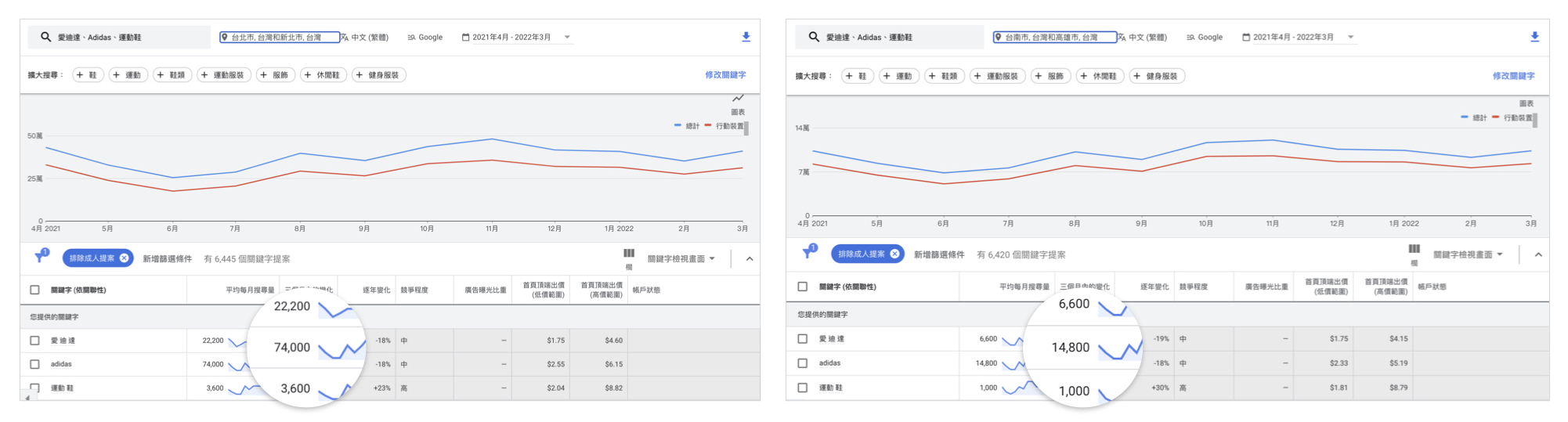
By filtering by location, brands can see how terms perform in specific regions and learn about local consumers’ search behaviour and level of demand. For advertising strategy, brands can then use the search interest of consumers in different regions as a basis for allocating budget by region, giving them more control over the budget and using it more efficiently.
Google Ads Keyword Planner offers a simple way for brands to do market research without spending a lot of time and extra money. To find out more about our marketing strategy and ad optimisation services, get in touch.