From AI Max and Meta AI Creative to CRM agents, AI is becoming a default capability in everyday business. The real key is not how much is automated, but whether its judgements can be understood, verified and traced.
It’s another Monday.
Last week we talked about how the key to being AI-native isn’t “how many tools you’ve bought” but “legibility”: making data, processes, experience and judgement understandable, so that AI can amplify them.
This week I want to follow on with something that’s even easier to overlook.
Over the past year, AI has gone from an “assistive tool” to a “default capability”. It’s no longer a plug-in you switch on when needed, but something quietly built into the advertising, search, CRM and commerce platforms we use every day. Without being explicitly called on, it’s already making decisions for us.
So I’ll put this week’s keyword up front: verifiability. If last week was about “helping AI understand us”, this week is about “helping us understand AI”.
As efficiency rises, visibility is falling
First, a look at the past six months.
Google is upgrading its long-established Dynamic Search Ads (DSA) entirely to AI Max; automatic migration was first planned for September this year but has been postponed to February 2027. Search ads are shifting from “managing keywords” to “understanding intent”, with even creative and landing pages handed over to the system to generate. Meta has combined generative imaging with Advantage+ creative capabilities, making creative and variant testing so fast that an afternoon can cover what used to take a whole week. Looking further into the back end of the business, AI agents are starting to appear in CRM and commerce workflows too, taking part in recommendations, customer service and even transactions themselves.
The direction is consistent: AI is moving from “doing things for you” to “deciding for you”.
The question is:
・The system has assembled the creative, but do you know why it chose this combination?
・It has allocated the budget, but can you reconstruct why it increased spend on that audience that day?
・It has replied to a customer, but can that judgement be traced afterwards?
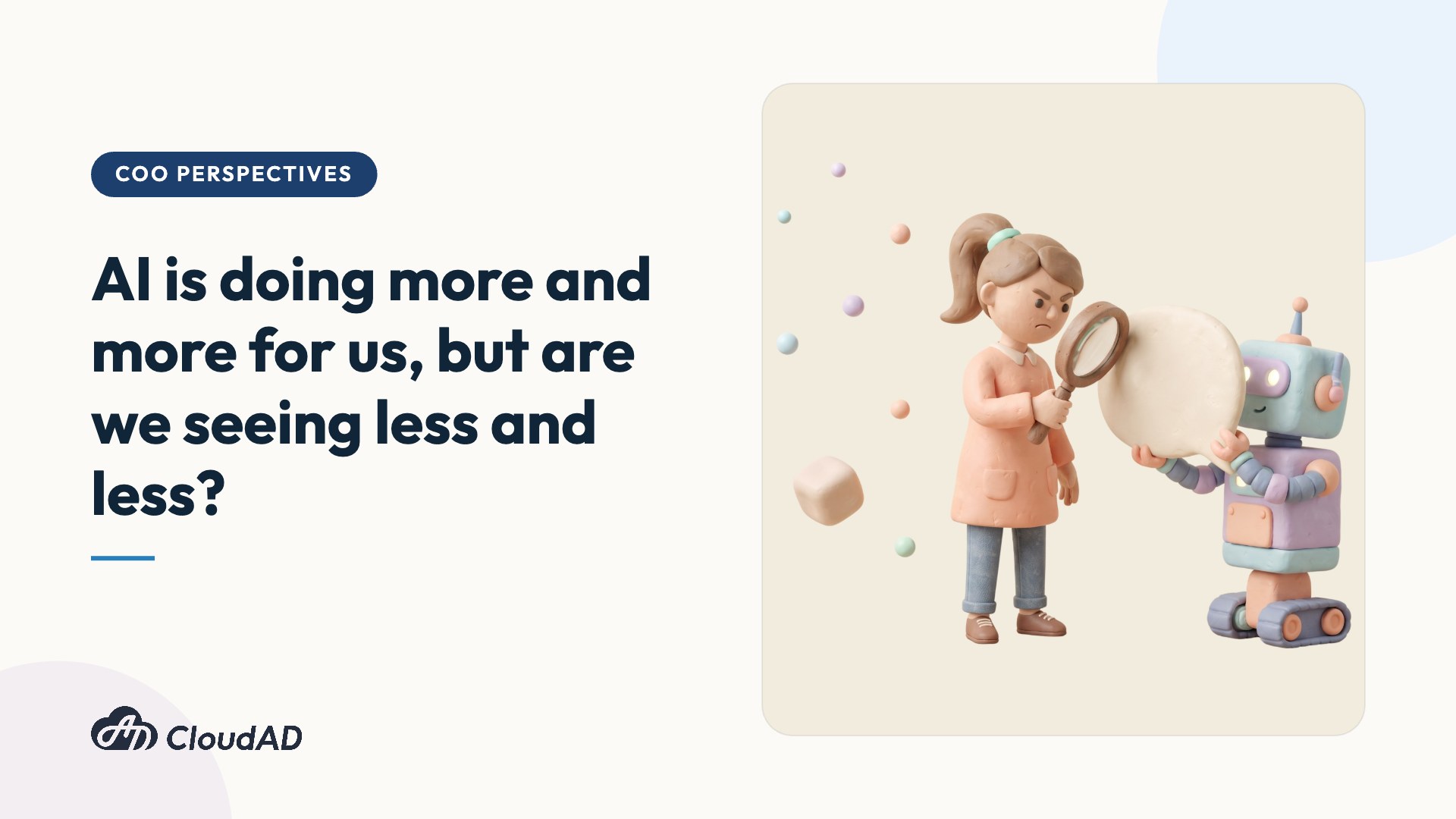
Efficiency has certainly gone up. But each time “it did it for me”, the decision process slips one layer further into a black box. “Doing more and more, seeing less and less” isn’t scaremongering. It’s what many teams are genuinely experiencing now.
Not being able to see is turning from a management issue into a compliance issue
What’s more notable is that this is now reaching beyond the company itself.
Google has started pushing transparency labels for ad creative generated or modified by AI, and the EU has published a code of practice on the transparency of generative AI content. The signal is clear: AI-generated content is entering a stage where it needs to be disclosed, recorded and traceable.
The same logic played out earlier on the data side. What GA4 has really strengthened in recent years isn’t how good the reports look, but data identity, permissions and governance: who can change settings, where data comes from, and whether server-side events are being used as a tool to casually fill in numbers. These aren’t back-end details. They’re the underlying question of “whether the data can be trusted”.
In other words, visibility is no longer a nice-to-have. It’s a responsibility.
Using AI is no longer the bar; keeping it under control is
So this is how I see the coming dividing line.
Being able to use AI is no longer rare. By the end of the year, teams that can use AI Max, write prompts and get agents to run processes will be everywhere. What will really set teams apart is whether they can build a way of working with AI that is controllable, verifiable and traceable:
・Controllable: knowing which decisions can be handed to AI and which must stay with people
・Verifiable: being able to go back and check the inputs, settings and outputs behind AI’s recommendations, rather than accepting them wholesale
・Traceable: when you look back three months later, being able to reconstruct “why we did it this way”, not just “what we did”
These three things happen to be exactly what CloudAD has always done. We often describe ourselves as a data company, but data has never been just reports. Its real role is to make the reasons behind judgements visible, verifiable and traceable, and to turn each judgement into insight that can be used next time.
AI has made “doing” very cheap. But “understanding why” has become more costly, and more valuable.
But verification doesn’t need to become another drain
Of course, this post shouldn’t be taken wholesale either.
Research suggests that buyers who use AI search are more likely to complete a purchase. That’s a directional signal worth noting, but it may not apply to every industry. Don’t take the numbers too literally, but the direction is worth considering. Likewise, not every process is worth having people verify every step. Over-scrutiny is itself a form of waste.
The point has never been “don’t trust AI”. It’s keeping the ability to see in the right places. Which steps can be let go and which need a light left on: making that call is the real homework for business leaders and their marketing and data teams.
Finally
Back to the original question: as AI does more and more for us, are we seeing less and less?
The answer depends on whether “being able to see” has been deliberately designed into the process.
AI’s value has never been that it lets us stop thinking. It’s that it gives us time back to do the more important thinking: why, whether it’s worth it, and where to go next.
Hand the “doing” to AI and keep the “why” for yourself. That’s probably the most cost-effective division of labour at this stage.
You don’t need to understand every step AI takes at once, but you at least need to be sure the data it’s based on is right.
However fast the judgement, if the source is wrong, it will only spend the budget wrongly at greater speed. No one can open up a platform’s black box. But whether your data sources are clean and your tracking is complete can be checked. That’s the first step towards being “verifiable”.
A digital health check will show whether your data sources can support AI-driven advertising.
References
・Google | Expanding AI transparency in ads
・Google | We’re upgrading Dynamic Search Ads to AI Max
・Google | A new generation of ads for the AI era of Search
・Meta | Introducing Muse Image: Image Generation Built for Your World
・Google Analytics | Admin API Changelog
・Google Analytics | Measurement Protocol (GA4)
・Salesforce | Agentforce Commerce Announcement
・HubSpot | Buyers using AI search are more likely to purchase
・European Commission | Code of Practice on Transparency of AI-Generated Content
・Google | Google Marketing Live 2026: News and announcements