The challenge
An insurance brand wanted to grow revenue with awareness and traffic media. But insurance sales cycles are long, so media performance is hard to judge quickly. Products are also varied and very different. Automated campaigns tended to concentrate conversions on a single product, making budget hard to allocate and limiting the real benefit.
Media strategy
To understand the differences between insurance types and plan media precisely, CloudAD started from GA data, looking at the average time to conversion, number of interactions and cost for each type to find what set them apart. We then adjusted the media mix and budget for each type and set optimisation guidelines for each medium.
How we did it

Step 1: data insight
Using GA path length and time lag reports together with ad conversion results, we assessed demand for each insurance type and divided them into essential products, which people buy as soon as they need them, and elective products, which people consider only once a latent need is sparked and amplified.
Step 2: media planning
For essential products, the goal is to find the right audience and focus on conversion, so the plan centred on conversion media such as search ads and Google Performance Max.
For elective products, the goal is to give people a reason to buy, build their understanding of insurance and convert when the time is right. This takes more time and more touchpoints, so we used proactive media such as display and native ads to build understanding, then captured conversions with search ads.
Step 3: ongoing optimisation
CloudAD kept improving Performance Max and search campaigns based on data feedback.
Google Performance Max: customer journeys differ greatly by product. Performance Max helps across the whole funnel, but machine learning tends not to spread results evenly across products. Instead of one campaign optimised automatically, as the brand had done before, CloudAD split the campaign structure by product data, chose bid strategies by sales volume and set bids from past costs, making machine learning more efficient.
Financial services have strict rules on personal data, so the brand could not upload first-party lists as learning signals. We strengthened audience signals with website audiences and Google custom audiences to guide the system towards potential customers.
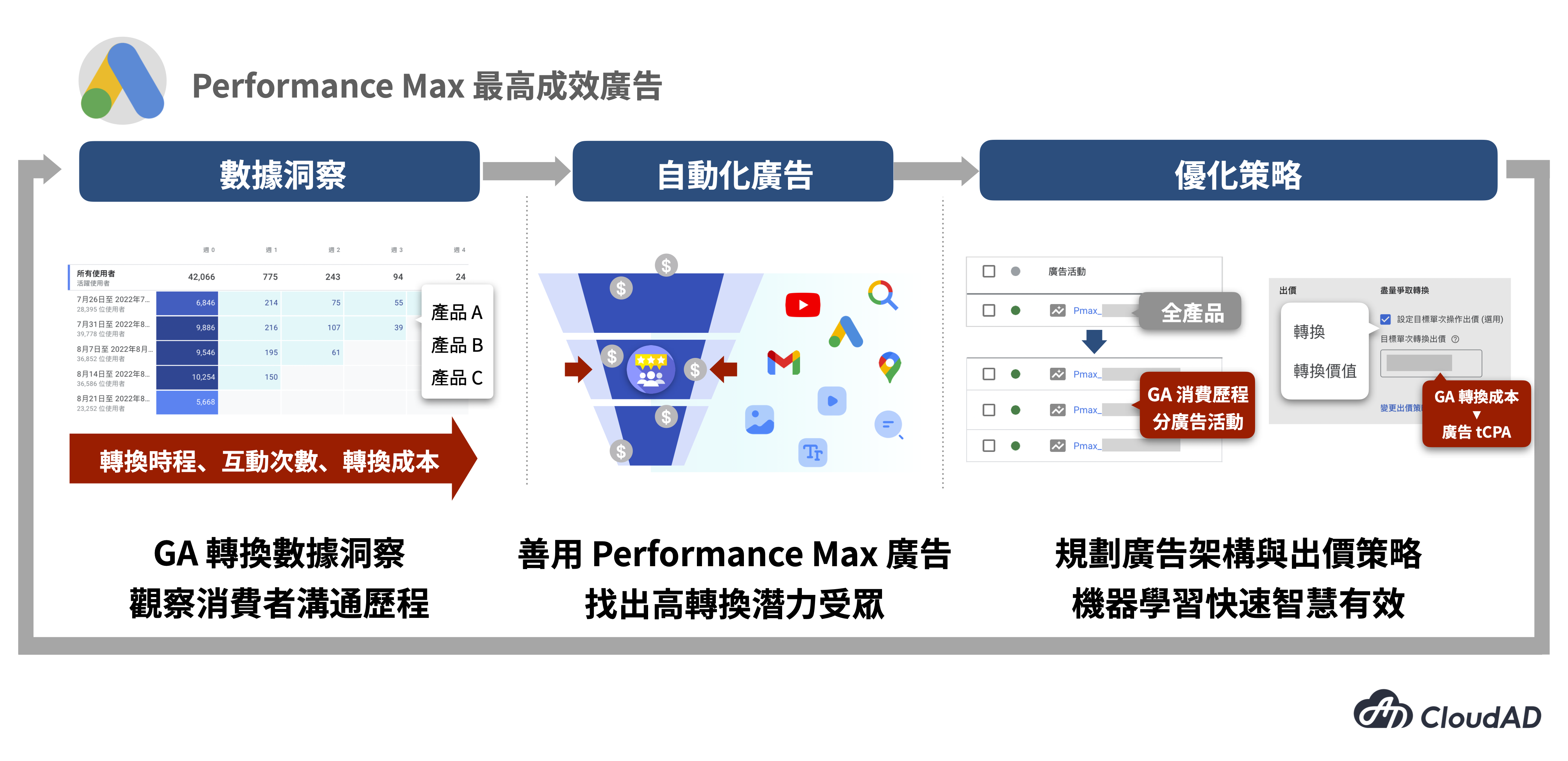
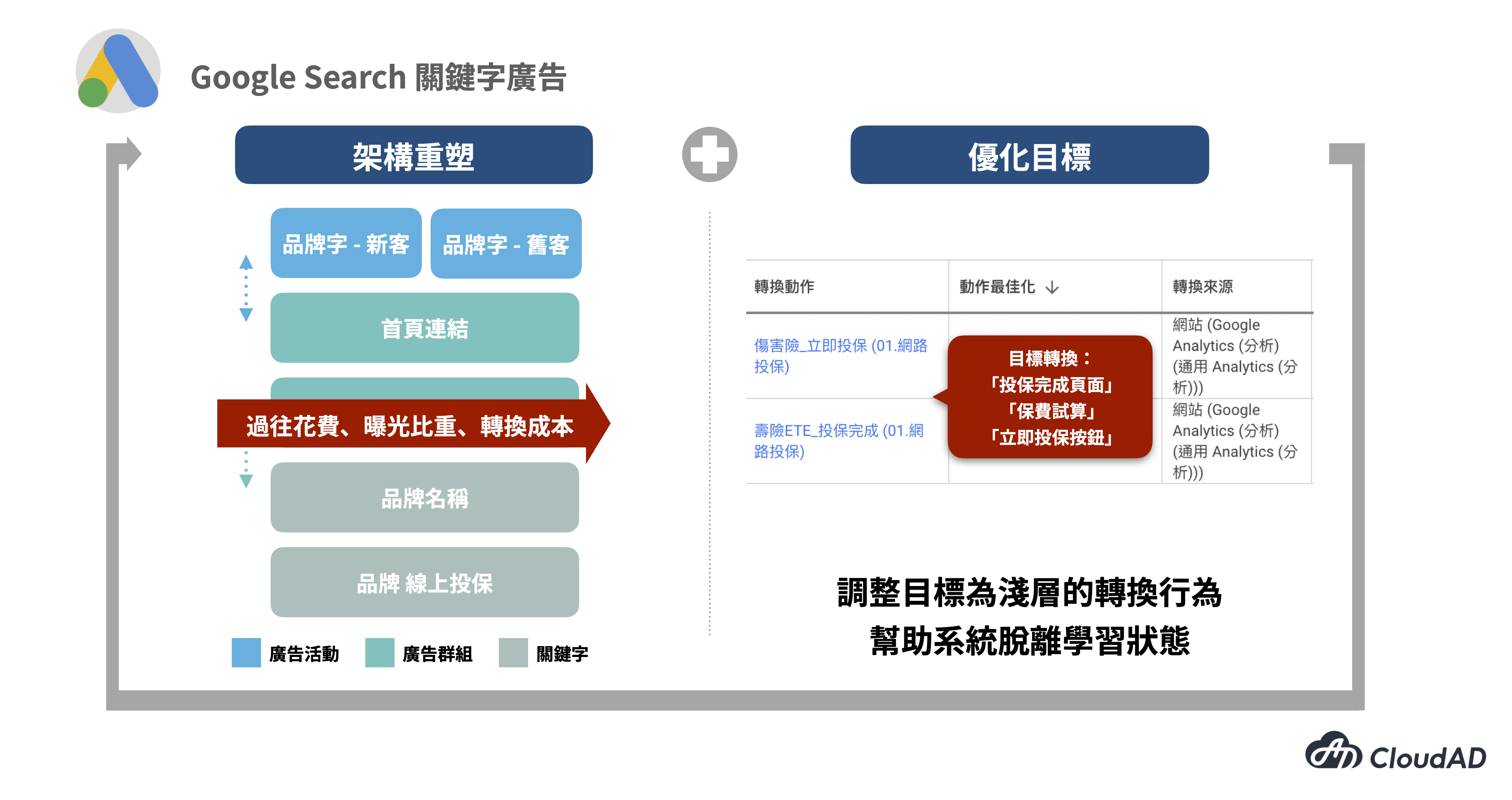
Search ads: the brand’s keyword structure combined insurance type with brand and product terms. CloudAD found that even within one type, search volume and conversion cost varied greatly with policy details such as policy term and premium level. Using past spend, impression share and conversion cost, we restructured the account and split very different product terms into their own groups, making cost control and performance review more efficient.
Because the brand measures results by GA product revenue, CloudAD also switched Google Ads to conversion goals imported from GA. To meet the data threshold for machine learning, we set goals according to each campaign’s conversion volume, using the policy completion page or shallower actions such as premium calculator or apply-now clicks, helping the system exit the learning phase.
Results
- Essential products: 2.7 times as many new customers, acquisition cost down 14%
- Elective products: 1.3 times as many new customers, acquisition cost down 24%
If you need media planning or GA4 data insight, get in touch.